Camino Francés Gear Recommendations
If you are planning to walk a Camino, you have probably read countless posts offering different kit recommendations. I certainly did, and found them very helpful. With that in mind, I thought I would throw my own experience into the mix and share my top three kit recommendations.
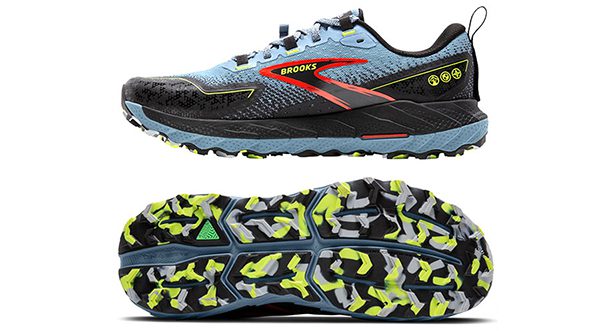
Men’s Brooks Cascadia 18

Women’s Brooks Cascadia 18
Trail Shoes – Go American!
The Gore-Tex shoe debate is always a hot topic, but for me the answer is simple.
If you’re walking the Camino in spring or summer, choose non-Gore-Tex shoes.
If you’re walking the Camino in late autumn or winter, choose Gore-Tex shoes.
The reason is straightforward: in spring and summer your feet need to stay cool, which means breathable footwear. In late autumn and winter, keeping your feet dry is the priority, and that’s when waterproof Gore-Tex shoes are best. Wet feet are the number one cause of blisters.
I tested seven different brands before finally finding the holy grail of trail shoes: the Brooks Cascadia 18. At the time, Brooks were so confident in their product that they offered a 90-day trial! With a full refund for any reason. I didn’t need it – I kept them.
They were, and still are, exceptionally comfortable trail shoes, perfectly suited to every type of terrain you will encounter along the Camino. After finishing my Camino Frances in 2025, I bought a new pair (while they were still available) for my Camino Portugués 2026. I also purchased the Brooks Cascadia 18 GTX (Gore-Tex version) so I could train through the winter months for my summer Camino.
Marianne went through a similar process, testing multiple brands, and came to the same conclusion. She bought the women’s version of the Brooks Cascadia 18, along with the Cascadia 18 GTX (Gore-Tex version) as well.
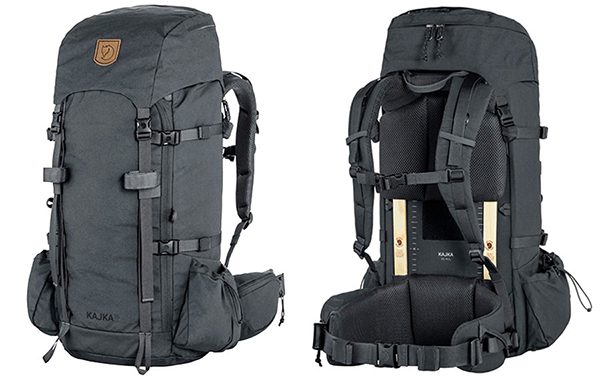
Fjällräven Kajka 35L

Fjällräven Kaipak 38 W
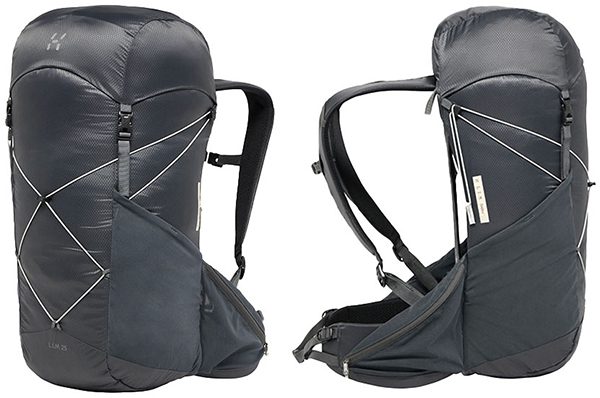
Haglöfs L.I.M 25
Backpacks – Go Swedish!
Sweden is home to two amazing hiking companies Fjällräven and Haglöfs and we have used both for many years.
One of the most frequently asked questions before starting the Camino is what to pack in your backpack. The short answer is simple: as little as possible. The less you carry, the more enjoyable the walk becomes. A good rule of thumb is that your backpack should weigh no more than 10% of your body weight. It’s surprising how little you actually need when you have to carry it every day.
Fjällräven Kajka 35L
I purchased a new backpack for the Camino Francés – the Fjällräven Kajka 35L – and for me, it turned out to be the perfect pack for the hike thanks to three standout features:
First, the full front opening makes organising effortless and gives a clear overview of everything inside. No more digging around for the one item that always seems to end up at the bottom of the bag.
Second, the top lid can be detached and worn as a crossbody bag, which is ideal for airports or exploring towns while keeping essentials like your passport and cards safely with you.
Third, the lightweight, adjustable wooden frame made from birch, combined with the supportive hip belt, creates a snug and comfortable fit that holds up well over long days on the trail.
Volume: 35L
Weight: 2150 g
Haglöfs L.I.M 25
Marianne initially used her old Fjällräven Kaipak 38 W backpack another excellent-quality pack (now discontinued but can be purchased second hand online) from Fjällräven. However, she soon felt that at 38 litres it was simply too large for this hike.
When we were forced to leave the Camino for a month due to wildfires (Read Day 25), she took the opportunity, once back in the UK, to purchase a new backpack: the Haglöfs L.I.M 25 and used it for the rest of the Camino.
This new backpack proved to be fantastic. With a capacity of just 25 litres, it turned out to be the perfect size for her needs (it is also available in a 35-litre version). One of its standout features is its weight – or lack of it – coming in at a mere 820 grams, making it impressively lightweight.
The pack also features an Airback suspension system with a specially designed back panel that provides essential ventilation. It is part of Haglöfs’ L.I.M series, which stands for “Less Is More,” their ultra-lightweight outdoor gear range.
I can imagine that this backpack in either a 25L or 35L size would be perfect for anyone who is considering walking the Camino Portugués.
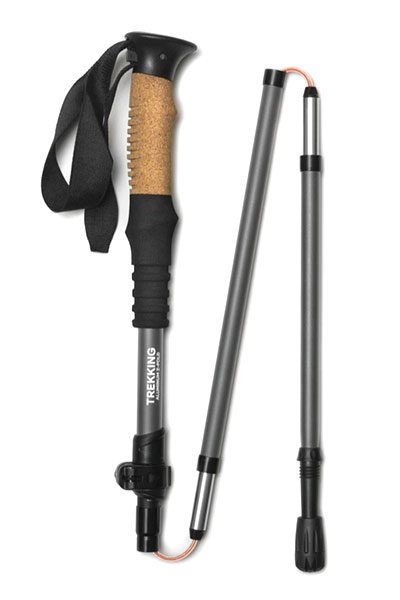
Walking Poles – Go Swedish!
Silva of Sweden offers four types of poles: Trekking Poles, Hiking Poles, Walking Poles, and Running Poles – and, just to make things a little more confusing, all of these are also commonly referred to as sticks.
I chose the folding option: the Aluminium Z-Fold Trekking Poles. They’re lightweight and fold down compactly, which means they fit easily into the side pockets on a backpack.
While you can of course buy poles along the Camino, I wanted to bring my own since I was already used to them. As poles (or sticks) are not allowed in the aircraft cabin, I folded them down inside my backpack and checked it into the hold.
Tip: To protect your backpack in the aircraft hold, place it inside a large blue IKEA bag. They are called Ikea Frakta bags and are available on Amazon – not aways available in Ikea shops.
I would not walk a Camino without poles. They quickly become your best friends – especially on the frequent uphill and downhill sections you will encounter on the Camino Francés. The benefits are significant: improved balance, reduced knee strain, better posture, and even a higher calorie burn.