


All images ©Copyright: Earthy Photography®
Day 32 | 28 September 2025 | Walking the Camino Francés
From Rabanal del Camino to Molinaseca | 25.6 km 15.9 miles
As soon as we left our accommodation, the climb began. The path rose steeply for the next 5.3 km, an ascent up the mountain to the hamlet of Foncebadón, where we finally stopped for breakfast.
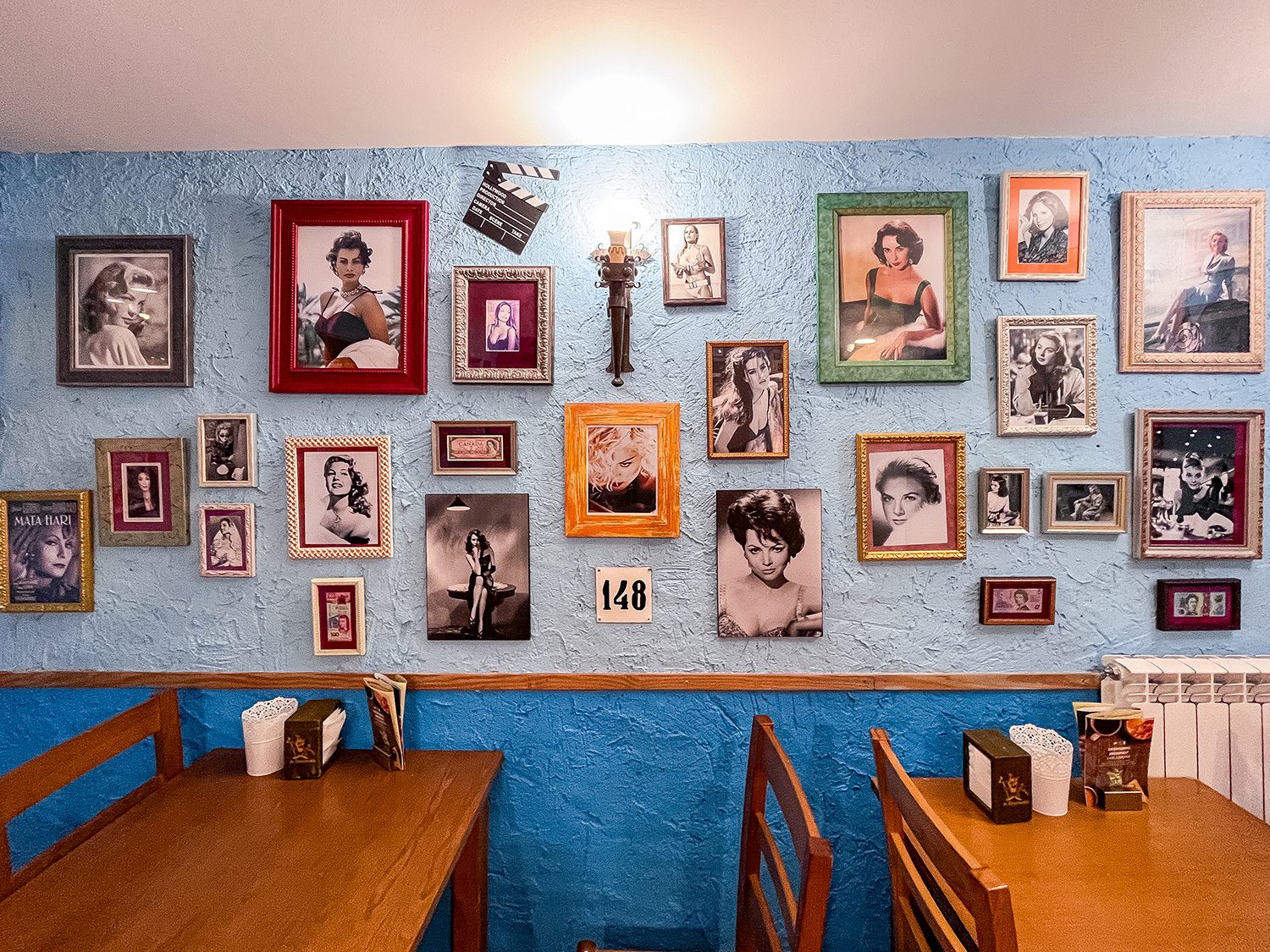
Inside the café, the walls were covered with photographs of glamorous actresses from a Hollywood bygone era. It was unexpected, odd, out of place – almost absurd – and for precisely those reasons, I loved it.
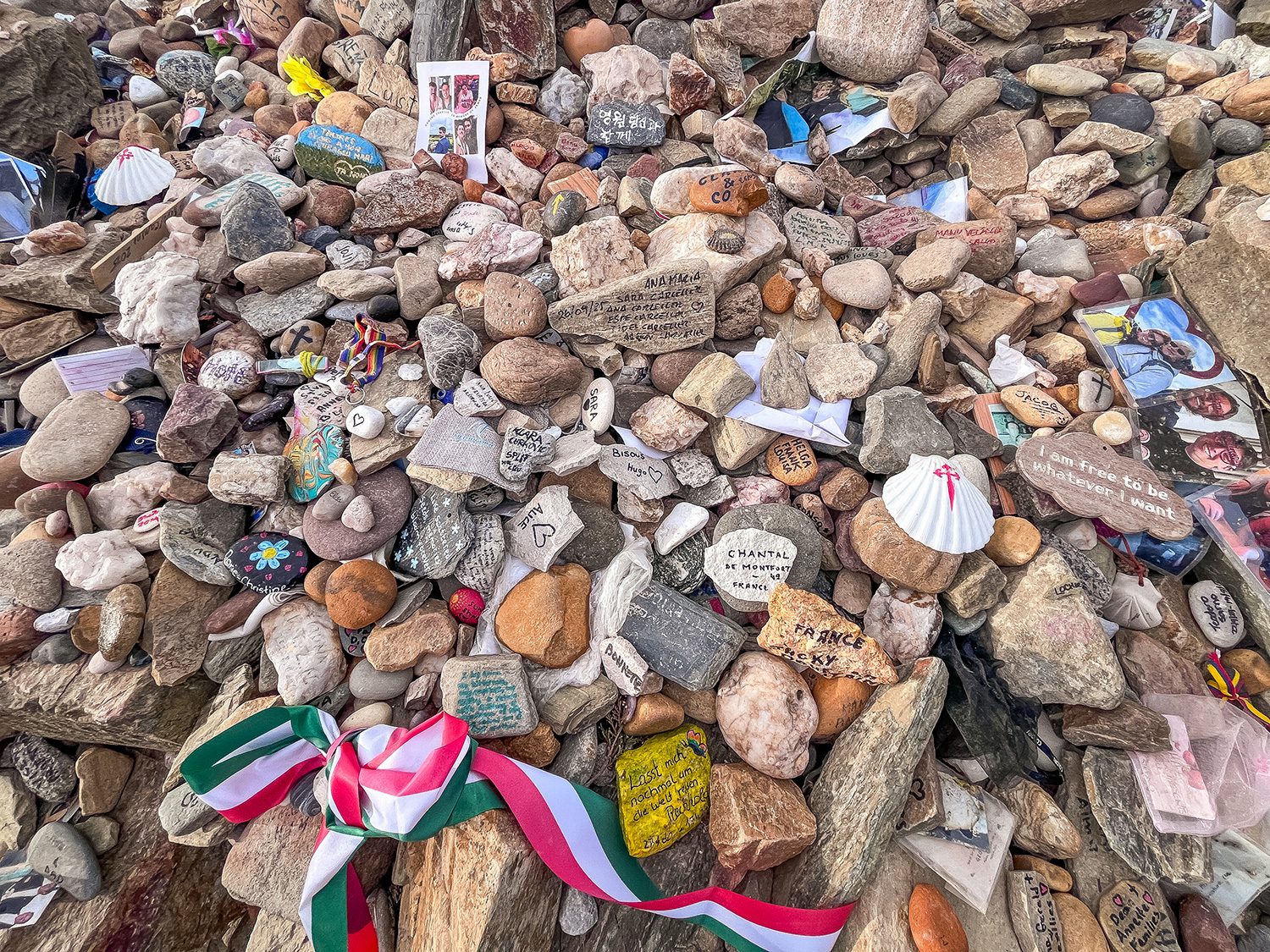
Leaving the café, we continued uphill for another 2 km until, quite suddenly, we reached the highest point of the entire Camino. At 1,504 metres, it is marked by the Cruz de Ferro (Iron Cross).
This simple iron cross perched atop a tall wooden pole is considered the most ancient monument on the Camino and is a sacred place for many pilgrims. Traditionally, pilgrims bring a stone from home and place it at the base of the cross – a symbolic act of releasing a life burden, seeking a blessing, or offering a prayer. For many, the moment is deeply spiritual, and I saw several people visibly moved as they let go of the burden they had been carrying.
For the next couple of hours, the walking eased onto dirt paths that were soft underfoot and gently descending. From our elevated position, we could see vast swathes of burnt trees across the surrounding mountains – the scars left by the major wildfires of August 2025, which had forced the closure of the Camino Francés between Astorga and Ponferrada – Day 25 tells the story of how this affected us.
The descent steepened as we approached the pretty village of Acebo, where we rested briefly before continuing downhill to Riego de Ambrós – and there we met ‘Lucy Fruit’ as she calls herself.
Lucy was wonderful. Outside her house, she handed out plastic mugs filled with freshly pressed cold orange juice, accompanied by slices of melon. Donations were optional. We were hot and tired, and it was the perfect stop. Marianne drank two; I had three. Marvellous.
Lucy told us how devastating the wildfires had been for her tiny hamlet of just nine people. At night, the mountains glowed red as the fires crept closer. Although the flames never quite reached them, the thick, poisonous smoke did. “You could not breathe,” she said. The rescue services evacuated them, and they were unable to return home for two weeks.
Leaving Riego de Ambrós, things went downhill very quickly – quite literally. The descent was rocky and brutally steep, a 5 km stretch our guidebook had warned us about. For the past three days, flies had plagued the Camino, a torment for everyone.
As we began the descent, I was surrounded by a swarm – around my head, my hat, and the top of my backpack – far worse than anyone else. To this day, I have no idea why. I checked repeatedly that nothing in or on my pack could be attracting them.
The 5 km descent into Molinaseca took two exhausting hours. The terrain was challaging, and I relied heavily on my walking poles to pick my way through the rocks. Whenever my hands were occupied, the flies swarmed my face. It was miserable.
Then, just as suddenly as they had appeared, the flies vanished when we reached Molinaseca. We stopped at the very first bar we found – a stiff Gin was in order.
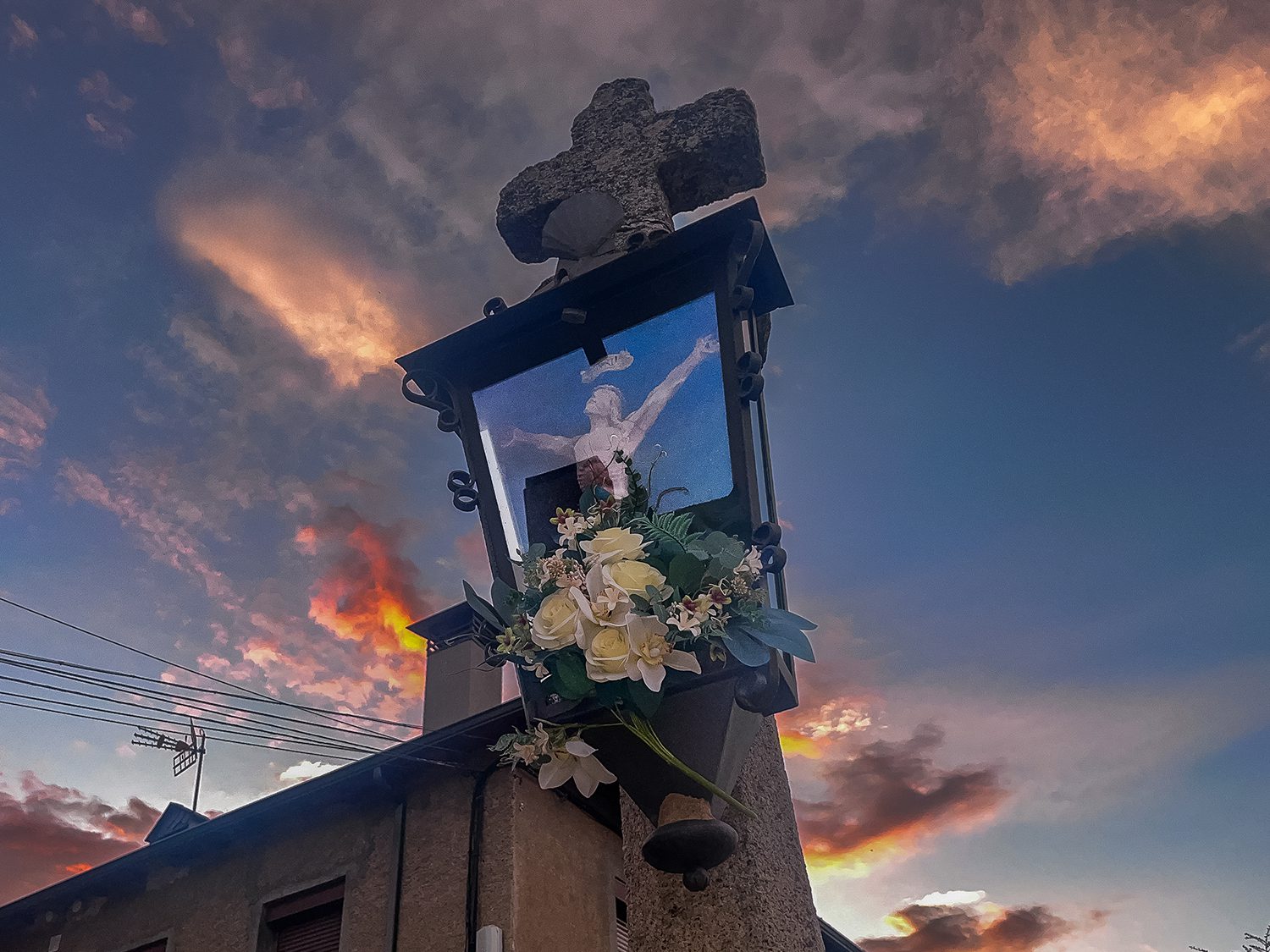
After dinner, I wandered through the village, taking photographs of what caught my eye. It had been a long, demanding day, and sleep came easily.